Walmart Spark Driver Tips (2026): 10 Ways to Earn More Per Mile
In this article
Walmart's Spark Driver platform now covers most of the US, and the written advice on it is thin — most of what ranks is salary aggregators and forum scraps. So here is a real playbook: ten tips, ranked by how much they move your hourly rate, with every number attributed to its source.
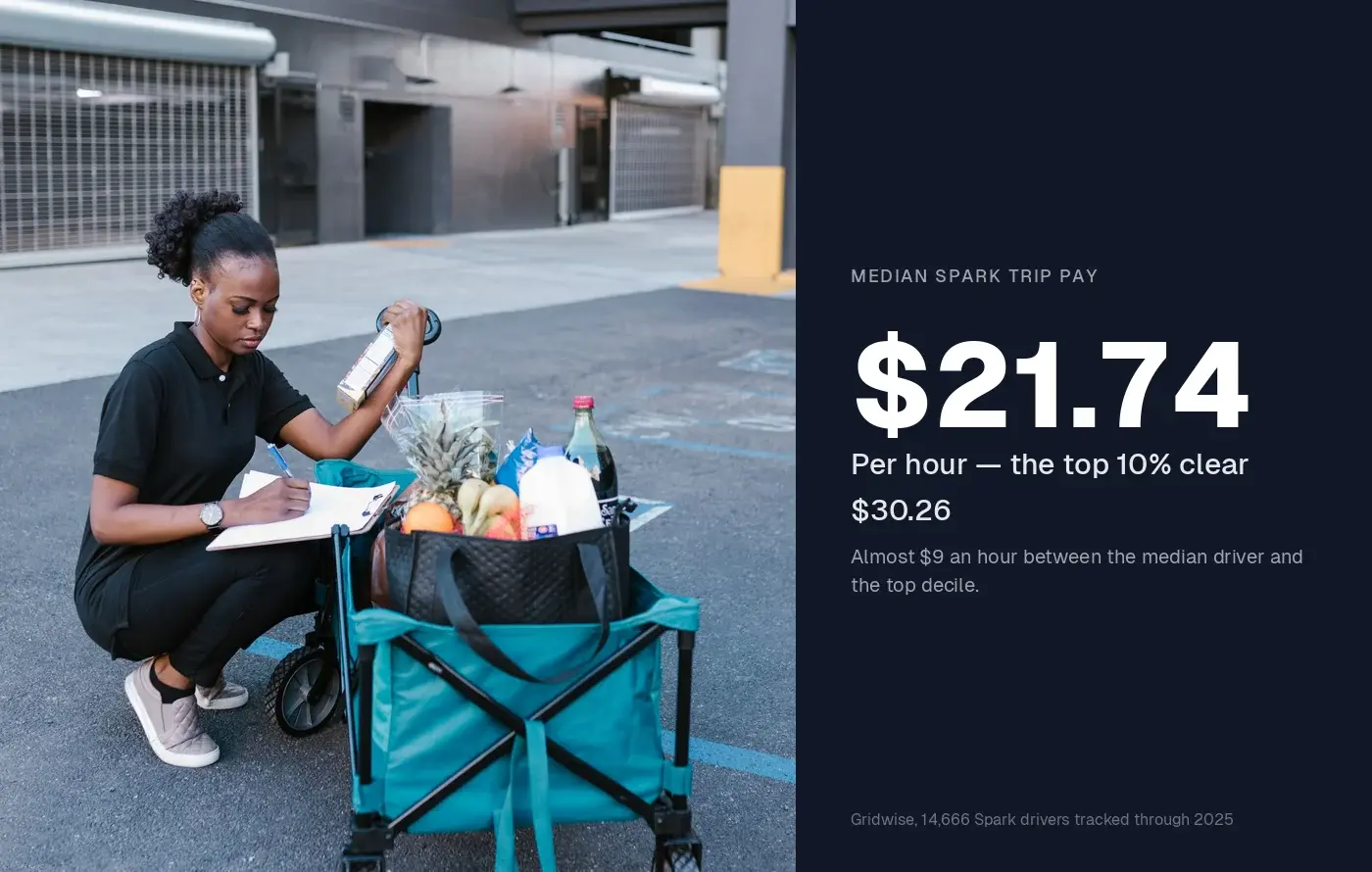
First, the baseline you're playing against. Gridwise tracked 14,666 Spark drivers through 2025 — the largest public Spark dataset — and found a median of $21.74/hour in trip pay ($22.57/hour gross including incentives), with the top 10% at $30.26/hour or more. That ~$9/hour gap between the median driver and the top decile is the prize. It mostly comes down to decisions, not luck.
The top 5, in one glance
- 1Judge every offer in dollars per mile — count the miles back, not just the miles out. Median gross on Spark is $2.06/mile (Gridwise, 2025); offers far below your floor are subsidized by your car.
- 2Ignore acceptance rate. Spark says it doesn't affect offers, and it can't deactivate you — customer rating, on-time arrival, and drop rate are the metrics to protect.
- 3Treat the tip as unconfirmed until 24 hours after delivery. Tip baiting is real on Spark, so accept offers the base pay justifies.
- 4Qualify for Tier 2 rewards (20 trips/month + green customer rating) and stack lump-sum incentives — that's the gap between trip pay and gross pay.
- 5Run the delivery phase deliberately: stage the car by drop order, follow the app inside a Spark batch, and use a route optimizer for what Spark can't see — multi-app days and personal errands.
Every figure in this article is sourced and dated inline. Driver-reported numbers are labeled as such.
1. Judge every offer in dollars per mile
The single highest-leverage habit. An offer shows estimated earnings and distance — divide one by the other before anything else. The Gridwise 2025 dataset puts median gross pay at $2.06 per mile, so an offer paying well under that needs a reason (short, fast, positions you somewhere busy).
Two corrections drivers learn the hard way:
- Count the return miles. The app quotes miles to the customer; the drive back to the store or zone is unpaid. A "$10 for 5 miles" offer to the edge of nowhere is really $10 for 10 miles.
- Count the wait. Curbside offers with a long line at pickup destroy an hourly rate that looked fine on paper. Your real metric is dollars per hour, and miles plus wait time are what spend it.
Many gig drivers use a personal floor — commonly $1 to $1.50 per mile round-trip as a rule of thumb — and adjust it up in busy windows. Wherever you set yours, having one turns every offer into a 3-second decision.
2. Stop worrying about acceptance rate
Spark's official FAQ is unambiguous: "Your acceptance rate percentage won't impact your ability to receive orders," and there is no minimum acceptance rate (Ridesharing Driver, updated May 2024). Low acceptance also cannot get you deactivated.
Driver reports on r/Sparkdriver are split — some drivers at 0% acceptance report no change in offer flow, others in competitive zones swear offers thin out when they decline heavily. Nothing is confirmed either way, and Spark won't clarify. The rational play: decline freely, and protect the metrics that are documented to matter — customer rating, on-time arrival, and drop rate (dropping an order after accepting it).
3. Treat every tip as unconfirmed — because it is
Walmart lets customers adjust or remove a tip for up to 24 hours after delivery. Until then it sits in your earnings as an "unconfirmed tip." Tip baiting — a large tip attached to get the order picked up fast, then pulled — is a persistent Spark complaint: Ridesharing Driver (updated August 2025) documents driver reports of tips cut from $100 to $5, $64 to $10, and $20 to $0, with no compensation mechanism and no action from support. For contrast, DoorDash doesn't allow tip removal and Uber Eats cut its edit window to one hour.
The defense is arithmetic: accept offers where the base pay alone clears your per-mile floor, and let tips be upside. An offer that only works if a $40 tip survives is a gamble, not an order.
4. Know the offer types — they don't pay alike
Spark's official help docs define the menu:
| Offer type | What you do | What to watch |
|---|---|---|
| Curbside/delivery offers | Pick up a pre-shopped order, deliver it | Wait time at pickup is the hidden cost |
| Shop & deliver | Shop the order in-store, then deliver | Pays more; your shopping speed sets the hourly rate |
| Batched offers | 2+ customer orders, one pickup, multiple drop-offs | More stops per trip — check the drop-off spread before accepting |
| Customer returns | Collect items from a customer, return to store | Usually short and predictable |
Offers arrive two ways: Round Robin (a "Just for you" offer with a countdown timer, sent to you specifically) and First Come, First Serve (visible to multiple drivers until claimed). Round Robin offers reward being stationed near a busy store when the app considers you next in rotation.
5. Win shop-and-deliver on shopping speed
Shop & deliver pays better than curbside precisely because most drivers shop slowly. The app already helps: on batched shopping orders it letters every item by customer and suggests a shopping order so you shop two carts in one pass, then check out with a single QR code (Ridesharing Driver, updated May 2026). Learn one or two stores deeply, and message customers about substitutions immediately instead of standing in the aisle waiting for a reply.
6. Run the delivery phase like it's paid by the minute — because it is
At the Gridwise median of 2.10 deliveries per hour, saving three minutes per drop is roughly a 10% raise. The cheap wins:
- Stage the car in drop order. Last delivery loaded first, first delivery by the door. On a batched offer, thirty seconds of loading discipline saves five minutes of trunk archaeology at every stop.
- Follow the app inside a Spark batch. For its own batched offers, Spark presents the drop-offs within the trip — deliver the batch as offered rather than fighting the sequence. Spark batches are small (typically two or three orders), so the app's ordering costs you little.
- Photograph and go. Take the proof photo the moment the bags are down; write notes while walking back.
7. Use a route optimizer where Spark can't see — your multi-app day
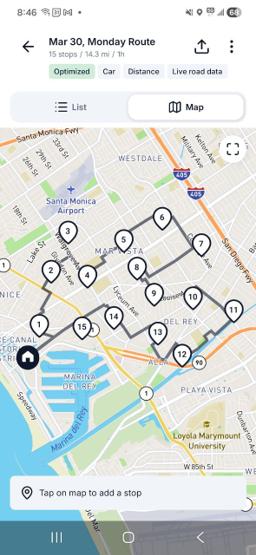
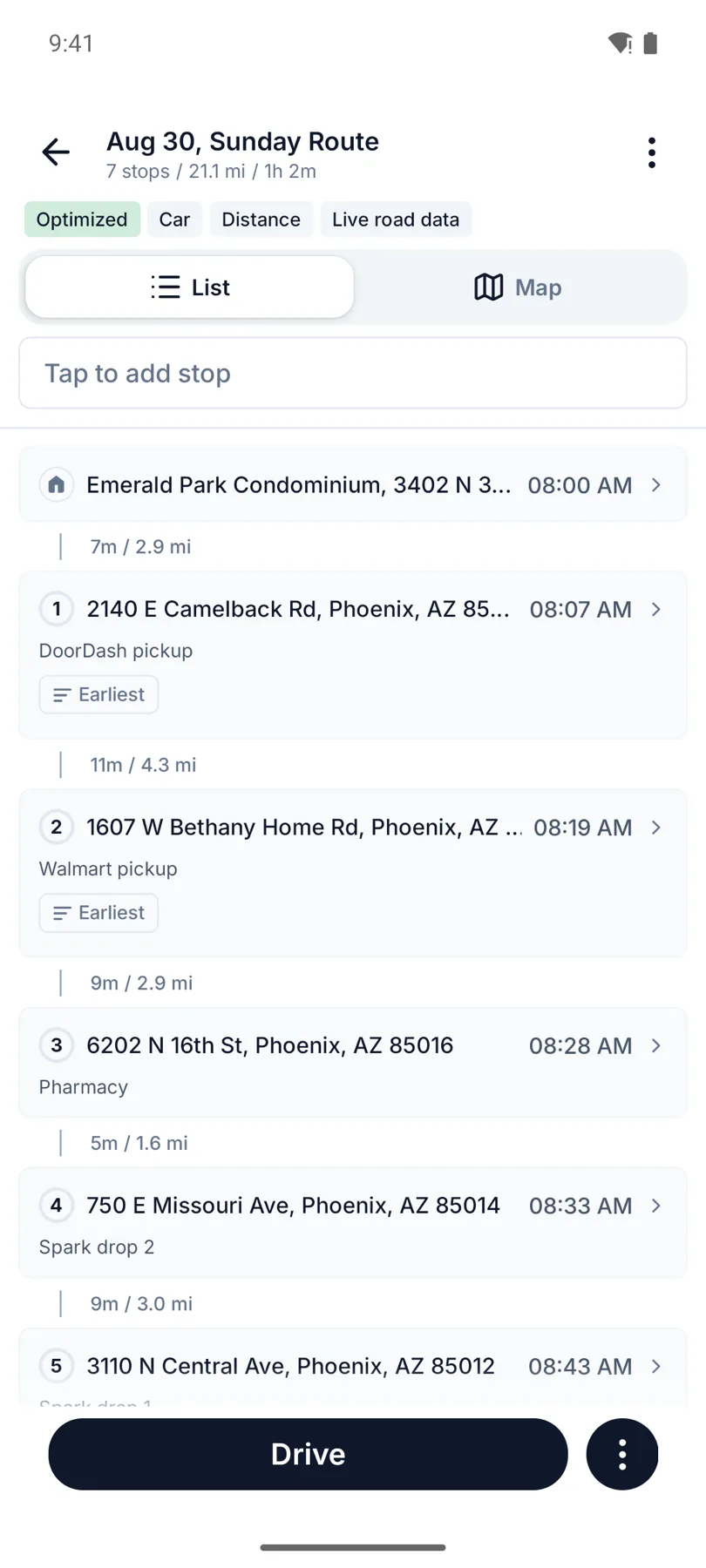
Here's where third-party route planning genuinely helps a Spark driver — and where it doesn't. Inside a single Spark batch, the app dictates the trip; you don't need another tool there. But Spark has no idea about the rest of your day: the DoorDash stack running in parallel, the Instacart order grabbed in a dead hour, the pharmacy pickup wedged between blocks.
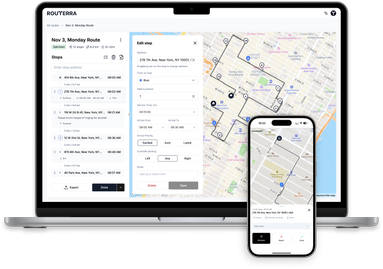
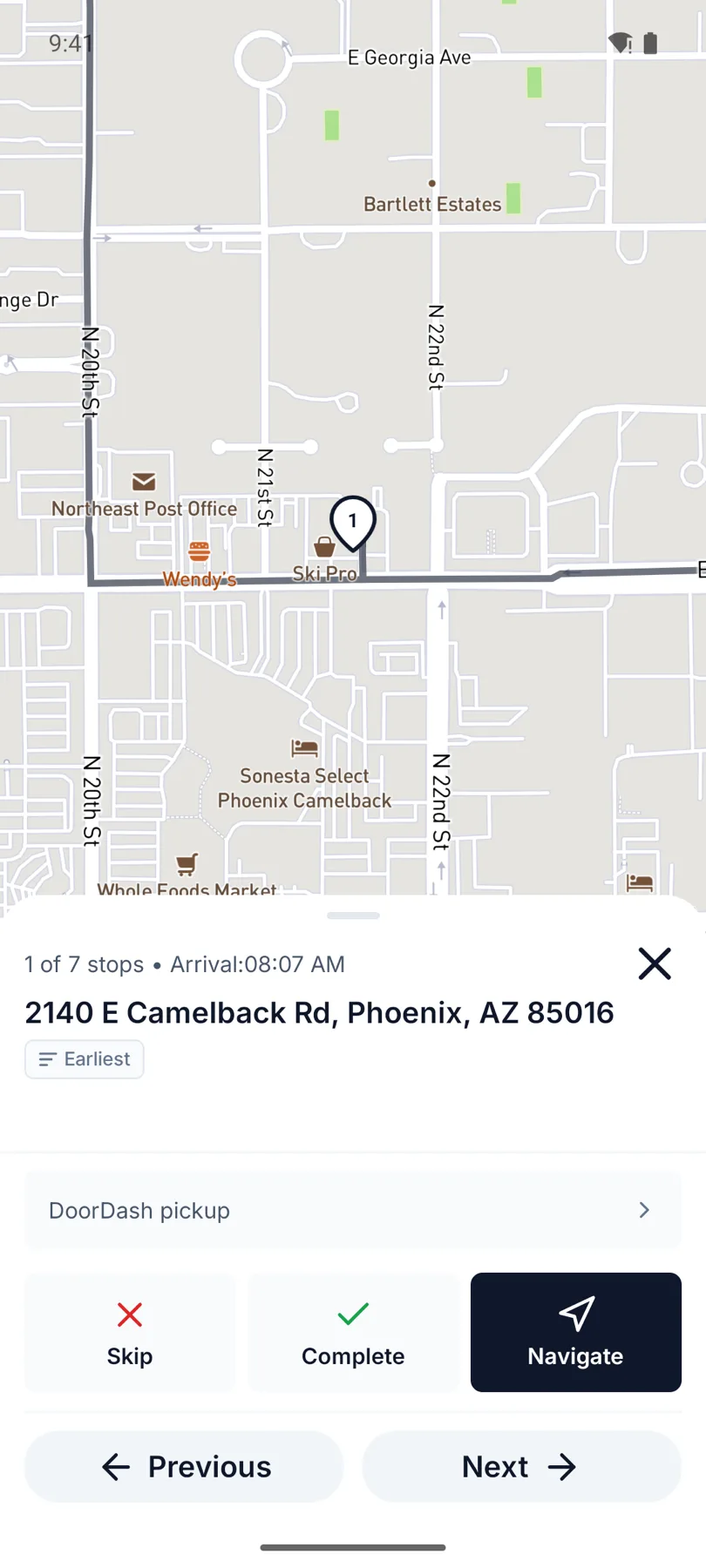
Many drivers multi-app precisely because Spark demand comes in waves. The moment your day has stops from more than one source, you are the dispatcher — and sequencing six cross-app stops by eyeballing a map is how you drive the same road twice. Dropping them into Routerra takes a minute: it optimizes the order across all of them and opens each leg in Google Maps or Waze for navigation.
8. Claim the money Spark hands out for showing up
The gap between Gridwise's median trip pay ($21.74/hr) and gross pay ($22.57/hr) is mostly incentives — and they're not automatic, you have to notice them:
- Tier 2 rewards. Spark's rewards program has two tiers: Tier 1 is every active driver; Tier 2 requires 20+ completed trips per calendar month plus a green customer rating, and unlocks a free Walmart+ membership (a $98/year value) plus partner discounts. Some markets are piloting a three-tier version, so your app may differ.
- Lump-sum and tiered incentives. Time-boxed offers like "complete 10 trips this week, earn an extra $30," sometimes stacked in tiers (Spark help docs). Check the app's incentives section before planning your week around it.
9. Cut your biggest expense: fuel
Every per-mile figure above is gross. Gas is the expense you control most directly, and on a 100-mile Spark day the difference between a wasteful and a disciplined fuel routine is real money every week. The tactics — pricing apps, filling on the cheap side of zone borders, smoother driving, and fewer redundant miles — are the same for every gig platform; we covered them in the gas-saving guide for delivery drivers, and you can put your own numbers into the delivery driver gas calculator to see what your routes actually cost.
10. Track miles from day one
Spark drivers are independent contractors, and at tax time the IRS standard mileage deduction is likely your largest write-off. Log every work mile — repositioning and return legs included — from your first trip. Reconstructing a year of miles in April is how drivers overpay.
So — is Spark worth it in 2026?
At the median, Spark pays like most gig delivery work: low-$20s per hour before expenses (Gridwise 2025; Salary.com lists ~$21/hour as of August 2026). "Worth it" is decided by the driver, not the platform: selective acceptance per mile, base-pay-first math on tips, Tier 2 plus incentives, multi-apping the dead hours, and a tight fuel routine are what separate the median from the top 10%. Run these tips for two weeks and compare your per-mile number before and after — that's the benchmark that matters.
FAQ
How much do Walmart Spark drivers make? Gridwise data from 14,666 drivers tracked through 2025: median $21.74/hour in trip pay, $22.57/hour gross with incentives, top 10% at $30.26/hour or more, and $2.06 per mile gross at the median. Salary.com lists ~$21/hour as of August 2026. All before gas, maintenance, and taxes.
Does acceptance rate matter on Spark? Officially no — Spark states it won't impact your ability to receive orders, and it can't trigger deactivation. Driver reports on r/Sparkdriver are mixed but unconfirmed. Customer rating, on-time arrival, and drop rate are the metrics that actually count.
What is tip baiting on Spark? Customers can change or remove a tip for up to 24 hours after delivery, so offer tips are estimates. Drivers report tips cut from $100 to $5 with no recourse (Ridesharing Driver, Aug 2025). Accept offers the base pay justifies.
Is being a Spark driver worth it? At the median it's ordinary gig pay; selective drivers in dense zones report $30+/hour. It's worth it if you screen offers per mile, claim Tier 2 and incentives, multi-app through slow hours, and control fuel costs.
How do batched orders work on Spark? Two or more orders, one pickup, multiple drop-offs. The app letters shopping items by customer, suggests a shopping order, and presents the drop-offs within the trip — you deliver the batch as offered.
Can you run Spark and DoorDash at the same time? Yes, many drivers multi-app. The apps don't coordinate, so sequencing stops across platforms is on you — that cross-app routing is where a separate route planner like Routerra fits.